Starting your own pet food brand takes more than attractive packaging. You need a clear market position, the right product format, a suitable formula and a manufacturing partner that can support the product from development to commercial production.
The U.S. pet industry reached USD 158 billion in 2025 and is projected to reach USD 165 billion in 2026, according to APPA. For new pet food brands, the growing market also means a more competitive environment, making product positioning and manufacturing quality important from the start.
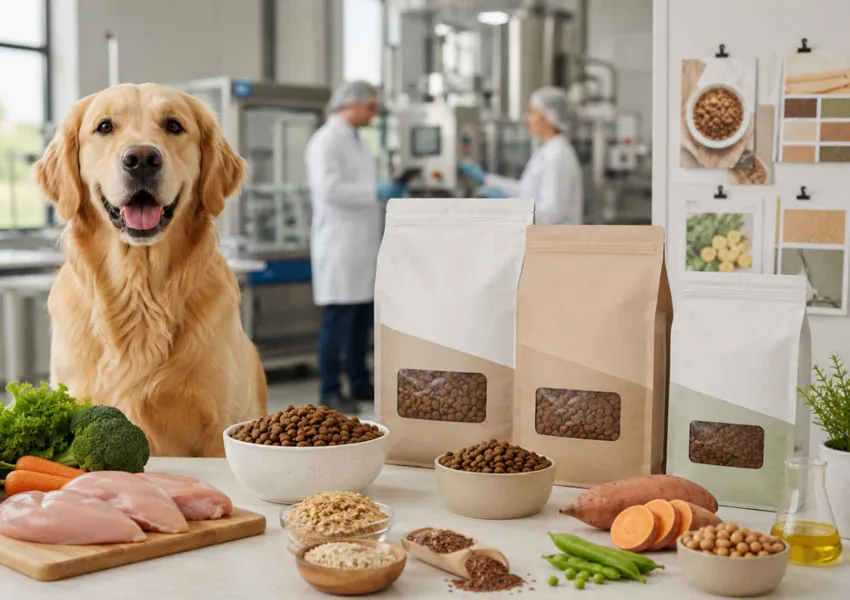
Before contacting a manufacturer, start with three basic questions: Who is the product for? What need does it address? And why should consumers choose it over existing products? You should also clarify the product format, price level, formula direction and sales channel.
The first product format also needs to be defined early: dry food, wet food, freeze-dried food, toppers, treats or functional snacks.
Private label pet food uses an existing or pre-developed product platform with your own branding, while custom formula development creates a more differentiated recipe based on your brand concept. The right choice depends on launch speed, budget, differentiation and long-term product strategy.
| Decision Area | Private Label Pet Food | Custom Formula Pet Food |
| Launch Speed | Faster | Slower because R&D and testing take time |
| Development Cost | Lower | Higher depending on R&D and testing requirements |
| Differentiation | Moderate | Stronger brand uniqueness |
| Best For | Startups, market testing and faster launches | Premium brands and long-term positioning |
| Formula Control | Limited customization | Higher customization |
| Buyer Focus | Packaging, MOQ, price and delivery | Nutrition, claims, ingredients and testing |
Private label can be a practical starting point for brands that want to test the market quickly. Custom formula development makes more sense when the brand relies on a specific protein source, functional benefit, ingredient story or premium nutrition positioning.
Once the product direction is clear, the next step is turning the concept into a safe, palatable and manufacturable formula. This stage includes nutrition design, ingredient selection, sample testing, pilot production, palatability review, shelf-life consideration and cost optimization.
If your pet food will be marketed as a daily diet, the formula and label should support a valid complete and balanced pet food claim for the intended life stage and feeding purpose.
Pilot production is necessary because a formula that looks good on paper may behave differently in real manufacturing. During trial runs, the manufacturer can evaluate kibble shape, moisture, texture, aroma, coating absorption, packaging compatibility and production yield. For premium or functional pet food, testing should also consider ingredient stability, palatability and whether the final product still matches the promised brand positioning.
Packaging, quality control and commercial production preparation help ensure that your product can be sold legally, produced consistently and delivered reliably. This stage connects brand design with regulatory requirements and factory execution.
For packaging, brand owners should prepare product name, net quantity, ingredient list, guaranteed analysis, nutritional adequacy statement, feeding directions, manufacturer or distributor information and market-specific label requirements. Before artwork is finalized, brands should review the pet food labeling requirements in their target market to ensure that product names, ingredients, nutritional information, feeding directions and other required details comply with local regulations.
Quality control should cover everything from raw material inspection and formula accuracy to production parameters, moisture control, packaging seal integrity, foreign matter prevention, microbiological safety and batch traceability. Food safety systems are equally important, including hazard analysis, preventive controls, microbiological testing and batch traceability, in line with the requirements of the target market.
Before commercial production, confirm MOQ, lead time, packaging materials, barcode requirements, carton specifications, inspection standards, retained samples and shipping plans. These details help prevent delays when moving from a pilot batch to full production.
The right manufacturer should offer more than production capacity. R&D support, quality systems, ingredient sourcing, category experience and project management all matter, especially when a brand plans to grow beyond its first SKU.
A good manufacturer should understand formulation, claims, ingredient sourcing, packaging, quality control, export requirements and project communication. For startups, project management is especially important because many delays can happen between concept, sample approval, packaging and production scheduling.
Gambol provides OEM/ODM support from formula development and sourcing to production, quality control and packaging. Its pet food solutions cover dry food, wet food, treats, freeze-dried products and multiple flavor and life-stage directions, helping brands plan both their first launch and future product extensions.
Starting your own pet food brand requires clear positioning, the right manufacturing model, careful formula development, compliant packaging and reliable quality control. Private label can help brands launch faster, while custom formula development can create stronger differentiation and long-term brand value. For new and growing brands, the manufacturer plays a role beyond production. The right partner can help connect formulation, sourcing, quality control and commercial production as the brand grows.
Gambol supports pet food brands with OEM/ODM services, product development, manufacturing and quality control, with a broad product range covering dry food, wet food, treats and innovative pet nutrition solutions.
Yes. Private label pet food can help startups launch faster with lower development costs, especially when the goal is to test market demand before investing in a custom formula.
Choose a custom formula when your brand needs stronger differentiation, specific nutrition claims, unique ingredients, premium positioning or long-term product ownership.
Typical packaging information includes product name, ingredient list, guaranteed analysis, nutritional adequacy statement, feeding directions, quantity statement and manufacturer or distributor details.
Pilot production helps verify whether the formula, texture, palatability, packaging and manufacturing process can work before scaling to commercial production.
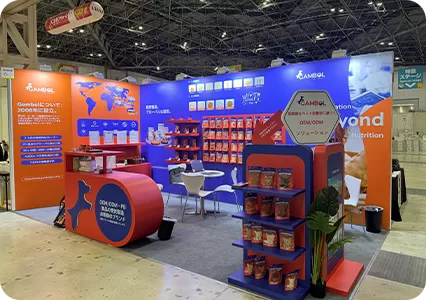 Interpets
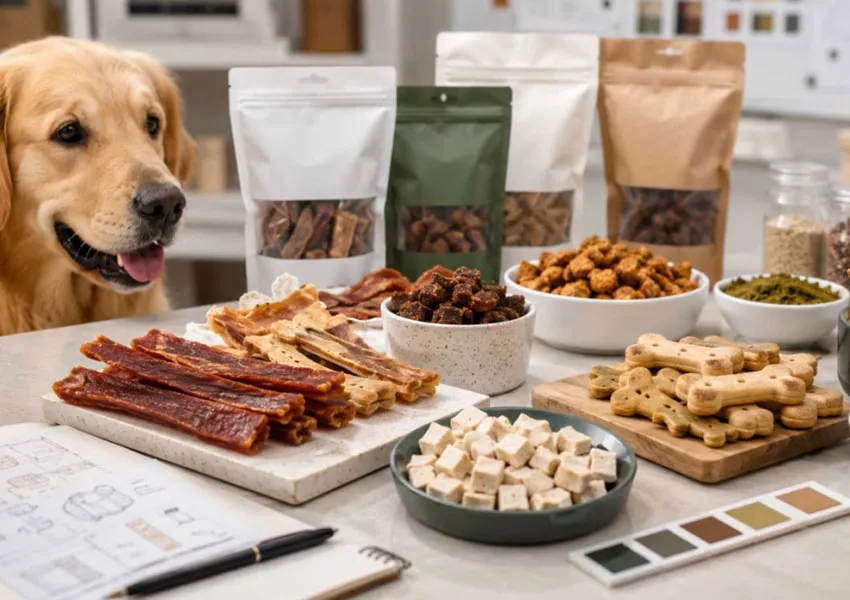 What's Popular in Dog Treats Today? New Product Trends in 2026
 Global Pet Expo

Building 10, Eureka Industry Park, Lane 863, Jinhui Road, Huacao Town, Minhang District, Shanghai, China

 English
 日本語
日本語 한국어
한국어 français
 Deutsch
 Español
 italiano
 русский
 português
 العربية
 Türkçe