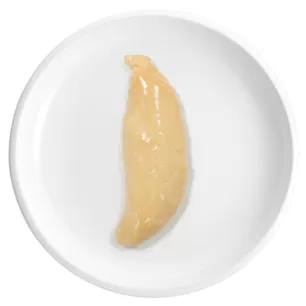
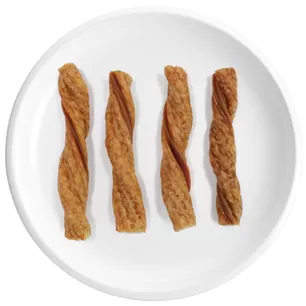
Freeze-dried vs air-dried dog treats is a key product-format decision for pet brands developing premium snacks, toppers or functional treats. Both formats are positioned as high-quality alternatives to conventional baked or extruded treats, but they differ in processing method, texture, moisture control, packaging requirements, cost structure and consumer perception. The category continues to attract product-development interest. At Global Pet Expo 2026, PetfoodIndustry reported that air-dried and freeze-dried formats remained popular in new dog food and treat launches, indicating that both formats continue to draw buyer attention.
Gambol supports pet brands through dog food and treat solutions and a structured OEM/ODM order process for brands developing freeze-dried, air-dried, meat-based, functional and customized treat products.
Freeze-dried and air-dried dog treats are both low-moisture pet snacks, but freeze-drying removes moisture under low temperature and vacuum conditions, while air-drying removes moisture through controlled airflow and heat over time.
Freeze-dried treats often have a light, porous and crisp texture. They are commonly used for premium single-ingredient meat treats, toppers and raw-inspired products because the format can preserve ingredient shape and visual identity. Air-dried treats usually have a denser, chewier texture and can feel closer to jerky, making them suitable for meat strips, chews and high-protein snacks.
This difference matters for brand strategy because each format creates different expectations around texture, usage occasion, packaging and price.
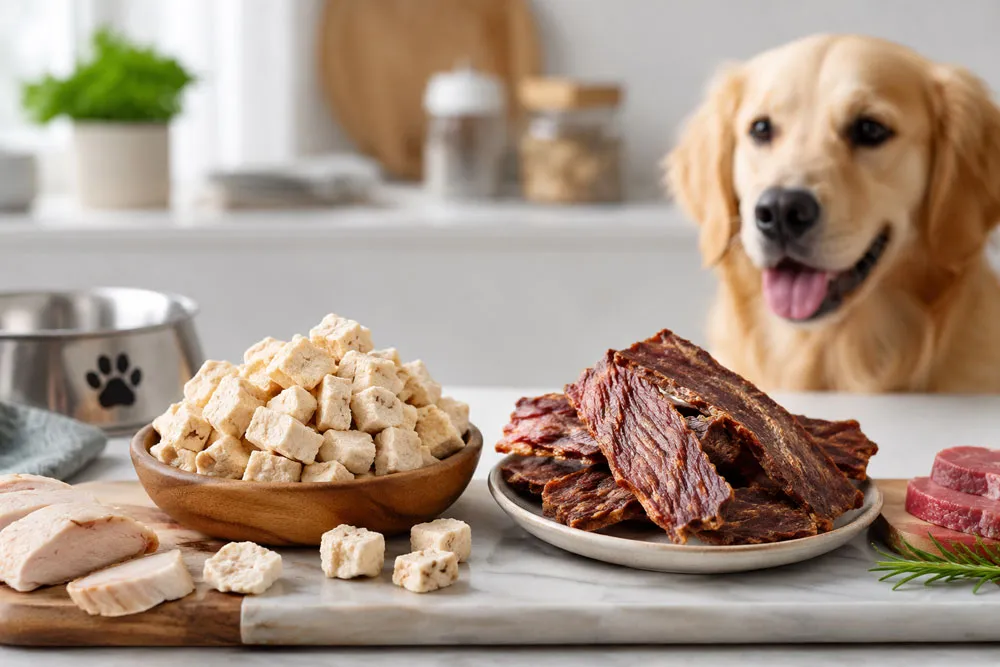
Processing method affects dog treat texture, aroma release, bite experience, visual quality and how consumers perceive the product on shelf. For premium pet treats, processing is not only a factory decision; it becomes part of the brand story.
Freeze-drying keeps more of the original ingredient shape, so chicken cubes, liver pieces, fish chunks or fruit inclusions can look more recognizable. The texture is usually lightweight and easy to break, which works well for training treats, meal toppers and small-breed snacks. However, some freeze-dried treats can crumble if packaging protection is weak.
Air-drying creates a denser product with stronger chew resistance. It is suitable for jerky-style treats, meat strips and longer chewing formats. Because air-dried treats are usually less fragile, they may perform better in retail bags, display boxes or multipack formats where product breakage must be controlled.
For brands, palatability should be tested rather than assumed. Dogs may respond differently to aroma intensity, fat coating, protein source, shape and chew time. Gambol can help brands compare process format, texture target and treat size before moving into pilot production.
Moisture, shelf stability and packaging requirements determine whether freeze-dried or air-dried dog treats can remain safe, attractive and commercially viable during storage and distribution. Both formats depend on strict moisture control, but their packaging risks are different.
Freeze-dried treats are highly moisture-sensitive. If the package barrier is poor, the product may absorb humidity, lose crispness or become less appealing. Air-dried treats also require moisture control, but their denser texture may tolerate handling differently depending on formulation.
To mitigate such packaging‑related risks, Gambol provides custom eco‑friendly packaging solutions aligned with your unique product profiles and sustainability targets. We help select suitable packaging options balanced for real‑world performance and cost efficiency, avoiding unnecessary over‑specification. Our sustainable packaging portfolio also delivers enhanced recyclability and degradability, to satisfy global environmental regulatory requirements for pet food products.
| Comparison Item | Freeze-Dried Dog Treats | Air-Dried Dog Treats |
| Processing Logic | Moisture removed under vacuum and low temperature | Moisture removed by controlled warm airflow |
| Typical Texture | Light, porous, crisp, easy to break | Dense, chewy, jerky-like |
| Product Appearance | Strong ingredient visibility | Strong meat-snack appearance |
| Packing Focus | Moisture barrier and breakage protection | Moisture control and air/aroma protection |
| Best Product Forms | Cubes, pieces, toppings, single-ingredient treats, playful shape | Strips, slices, jerky, chewy snacks |
| Shelf Stability Risk | Humidity absorption and crumbling | Texture change, oxidation or uneven drying |
Packaging should be designed around moisture barrier, oxygen control, bag strength, seal integrity and shelf display. For products sold in regulated pet food markets, brands should also plan label language early because AAFCO notes that treat products are a subset of pet food and are usually not intended to provide a complete and balanced diet.
Freeze-dried and air-dried dog treats fit different product positioning because consumers read texture, ingredient appearance and price in different ways. Freeze-dried is often better for ultra-premium, ingredient-forward and raw-inspired positioning, while air-dried is often better for premium daily treats with stronger chew satisfaction.
Choose freeze-dried if the product concept depends on lightweight training portions, topper usage or premium gifting.
Choose air-dried if the product concept depends on chewiness, meat-strip appearance or daily reward usage.
Gambol's product range covers freeze-dried products, natural meat treats, wrapped treats, biscuits, vegan products, chews and seasonal treats, helping brands build a tiered portfolio rather than relying on only one format. A brand may use freeze-dried treats for premium hero SKUs and air-dried treats for repeat-purchase daily snacks.
Functional ingredients should be added carefully. A digestive treat, skin-and-coat treat or joint-support treat needs more than marketing wording; the ingredient choice, inclusion level, processing stability and target market regulations must work together. FDA also explains that a valid complete and balanced pet food claim is normally supported by AAFCO nutrient profiles or feeding trials, which is important if a brand expands from treats into complete diets.
For treat development, brands should define whether the product is a reward snack, topper, training treat, functional supplement-style snack or part of a broader feeding system. This positioning affects formula, packaging, claim wording and retail price.
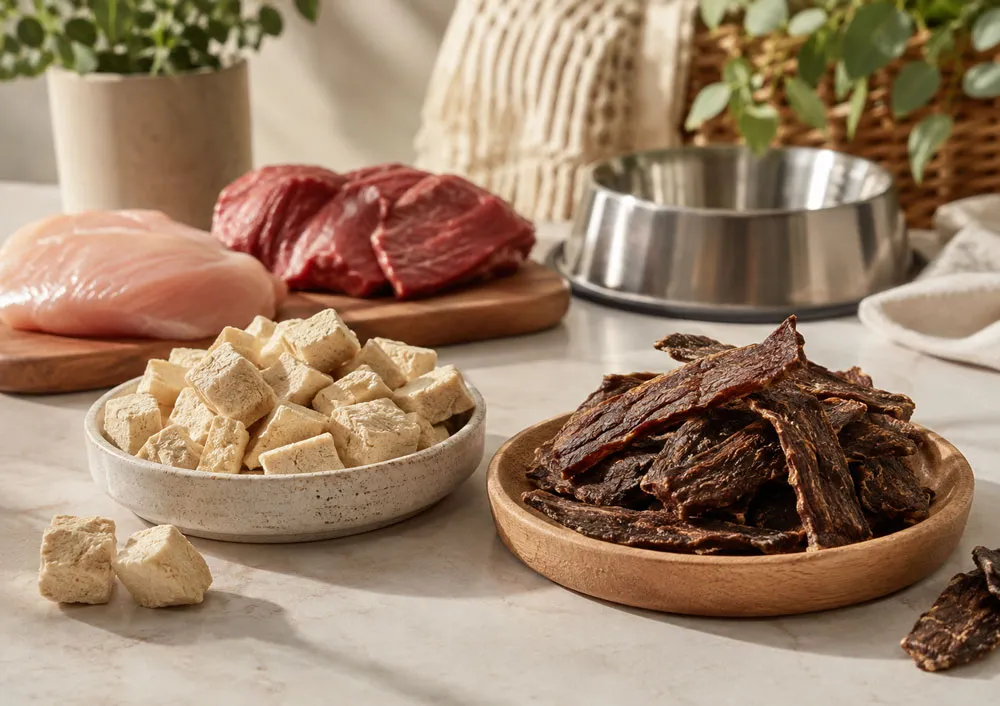
Manufacturing scale, quality control, MOQ and supply chain planning affect whether a freeze-dried or air-dried treat concept can move from sample to stable commercial production. A good product idea is not enough if it cannot be produced consistently at the required cost and volume.
For OEM/ODM projects, brands should confirm MOQ, lead time, raw material source, production capacity, test requirements, packaging options, carton specification and inspection standards before launch. Gambol's order process is designed to connect market positioning, recipe customization, quality control and packaging support, making it useful for brands comparing premium treat formats.
Food safety should also be part of supplier qualification, so brands should evaluate factory systems, batch traceability and quality documentation before choosing a production partner.
Freeze-dried and air-dried dog treats are both strong premium formats, but they serve different product strategies. Freeze-dried treats are better for lightweight texture, topper use and ultra-premium positioning. Air-dried treats are better for chewy texture, daily reward products, meat-strip formats and flexible price points. For pet brands, the right choice should be based on target consumers, product concept, protein source, texture goal, packaging requirements, MOQ, cost structure and manufacturing capability.
Gambol supports brands with freeze-dried, air-dried, meat-based, functional and customized dog treat development, helping turn market trends into commercially scalable products.
Freeze-dried treats are dried under vacuum and low temperature, creating a light and porous texture. Air-dried treats use controlled airflow and heat, creating a denser and chewier product.
Yes. Air-dried treats are often suitable for daily rewards because their chewy texture, meat-strip appearance and packaging flexibility work well for repeat-purchase products.
Yes. Freeze-dried treats can be lightweight and easy to break into smaller pieces, making them useful for training, small dogs and topper-style feeding.
Both require good packaging, but freeze-dried treats usually need stronger moisture-barrier and breakage-protection packaging because they are more fragile and humidity-sensitive.
Gambol supports OEM/ODM pet brands with product format selection, recipe customization, quality control, packaging support and broad dog treat manufacturing capabilities.
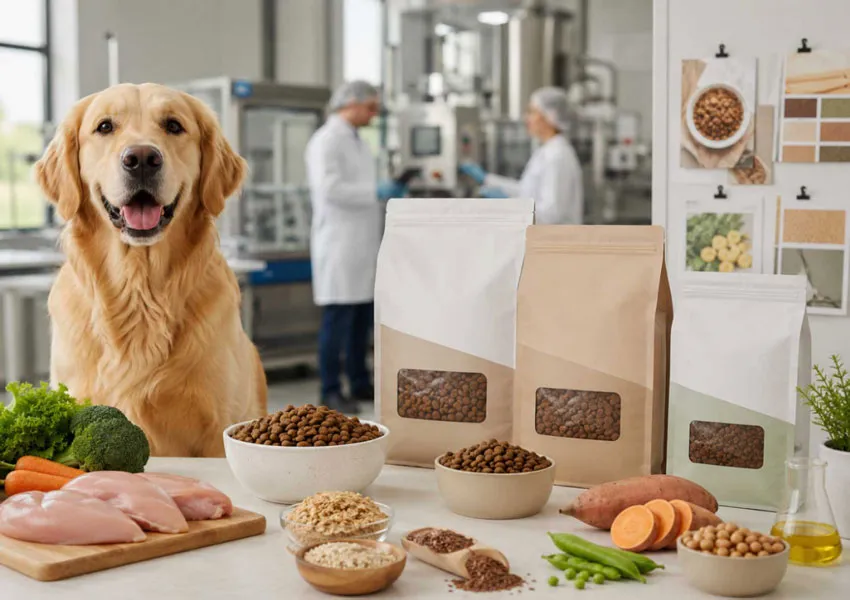 How to Start Your Own Pet Food Brand: From Brand Concept to Commercial Production
 PATS
PATS
 Interzoo

Building 10, Eureka Industry Park, Lane 863, Jinhui Road, Huacao Town, Minhang District, Shanghai, China

 English
 日本語
日本語 한국어
한국어 français
 Deutsch
 Español
 italiano
 русский
 português
 العربية
 Türkçe